Garage door safety sensors use an unseen beam to help stop the door from closing on people, pets, cars, or items. One sensor sends the beam, and the other receives it. If the beam breaks or the sensors move out of line, the opener may stop, reverse, or refuse to close.
A door that stays open can create a security concern. Sensor trouble often has a simple cause, such as dust, an item in the way, or a loose bracket. This guide explains what to check first and when professional help is the safer choice.
Table of Contents
- How do garage door safety sensors work?
- Why will my garage door not close?
- What do the garage door sensor lights mean?
- How do you clean garage door safety sensors?
- How do you realign garage door safety sensors?
- Can you bypass garage door safety sensors?
- When should you call a garage door repair professional?
- Key takeaways
- Frequently Asked Questions
- Conclusion
How do garage door safety sensors work?
Garage door safety sensors are small electronic parts near the bottom of the door tracks. They work as a pair. One sends an unseen infrared beam, and the other receives it. Infrared is light that people cannot see.
What each sensor does
One unit sends the beam. The other unit receives it. Both must face each other across the garage opening. They should also sit at nearly the same height.
The sensors often attach to the vertical tracks or small brackets nearby. A bin, car, tool, or heavy item can bump one out of place. Dust, spider webs, and moisture can also weaken the beam.
When the beam reaches the receiving sensor, the opener knows the opening is clear. It can then close the door during normal use. This garage door safety feature helps protect people, pets, and property below the door.
How the opener uses the sensor signal
The opener checks the sensor signal during each closing cycle. If the signal stops, the opener may stop the door or send it back up. This explains why a door may open normally but refuse to close.
Sensors do not cause every opener problem. A broken spring, bent track, weak motor, worn gear, or bad wall control can cause similar signs. A careful check should include the full system instead of blaming the sensors right away.
Yucca Valley Garage Door Repair helps property owners tell a simple sensor issue from a larger door problem. Safe testing matters because garage doors are heavy. Springs and cables can also hold strong force.
Why will my garage door not close?
A garage door may not close because something blocks the sensor beam. The sensors may also be out of line. Other opener or door problems can cause the same symptom. Start by checking both sensors and the space beneath the door.
Blocked or interrupted sensor beams
Look for toys, tools, bins, leaves, or stored items near the tracks. Even a small item can break the beam. Move the item away, then try the wall button while standing clear of the door.
Look at both sensor faces. Dust, webs, or water drops may cover the lens. Do not touch the door, springs, cables, or tracks while testing. If the door closes after the item is moved, the problem may have been a simple blockage.
A sensor wire may also be loose or damaged. It could be pinched, pulled from its terminal, or cut near the bracket. Electrical work inside the opener should be left to a trained garage door repair technician.
Other causes of stopping or reversing
The door may stop or reverse because the travel settings are wrong. A bent track or damaged roller can also cause trouble. A worn garage door spring may keep the door from moving in a balanced way.
A door that feels heavy, moves unevenly, or makes a loud snap needs prompt care. If the door closes partway and then reverses, the sensors are one possible cause. The opener may also be sensing extra resistance.
Do not press the button over and over. Repeated tries can strain the motor or make a mechanical fault worse. Garage Door Opener Repair may be needed when the motor runs but the door does not move. Yucca Valley Garage Door Repair can check the opener, door parts, and sensor circuit together.
What do the garage door sensor lights mean?
The sensor lights give clues about power and beam contact. A steady light often means the sensor has power and is lined up. The exact light pattern depends on the opener brand and model.
Steady and flashing lights
Steady lights on both sensors often mean the beam is complete. If one light is dark, the unit may have no power, a loose wire, or an internal fault. If one light flashes, the sensor may be out of line or receiving an unstable beam.
A light may blink when the bracket shakes. Movement from the door, track, or nearby items can change the signal. Watch the lights while checking whether a bracket feels loose. Do not bend the track to fix a sensor.
What different light patterns can indicate
Light colors and patterns are not the same on every opener. The owner manual gives the best meaning for your model. If the lights do not match the manual, the sensors may need cleaning, alignment, wiring repair, or replacement.
Common clues include:
- One dark light may point to a power or wiring issue.
- One flashing light may point to poor alignment.
- Normal lights may still appear when another opener fault exists.
- Lights that change when a wire moves may point to a loose connection.
- A door that reverses with clear lights may have travel or resistance trouble.
The lights are helpful clues, but they do not give a full diagnosis. A professional can test the signal and inspect the rest of the door system.
How do you clean garage door safety sensors?
Garage door safety sensors can often be cleaned with a soft, dry cloth. Turn off opener power before cleaning. Keep your fingers away from moving parts. Do not spray liquid on the sensors or wires.
Safe cleaning steps
Use this simple process:
- Close the door if it is safe, then disconnect opener power.
- Remove leaves, webs, and items from the sensor area.
- Wipe both sensor lenses with a clean, soft, dry cloth.
- Check the brackets and wires for looseness or damage.
- Restore power and test the door from a safe place.
The lens is the small clear area on the front of the sensor. Use light pressure when wiping it. A rough cloth can scratch the lens and make the beam harder to receive.
After cleaning, check the indicator lights. If both lights stay steady but the door still will not close, another issue may be present. The opener may need testing, or a sensor may have an internal fault.
Common cleaning mistakes to avoid
Do not spray glass cleaner, oil, or water directly into a sensor. Do not spray compressed air into the unit. Liquid can reach the wiring or circuit board. Never scrape the lens with a blade or screwdriver.
Do not touch springs, cables, rollers, or lift brackets while cleaning. These parts can move without warning or hold stored force. Cleaning should only involve the sensor face and the nearby area.
If a sensor stays dark while the opener has power, stop troubleshooting there. Wiring or part testing may be needed. A garage door repair technician can find the fault without adding a new safety risk.
How do you realign garage door safety sensors?
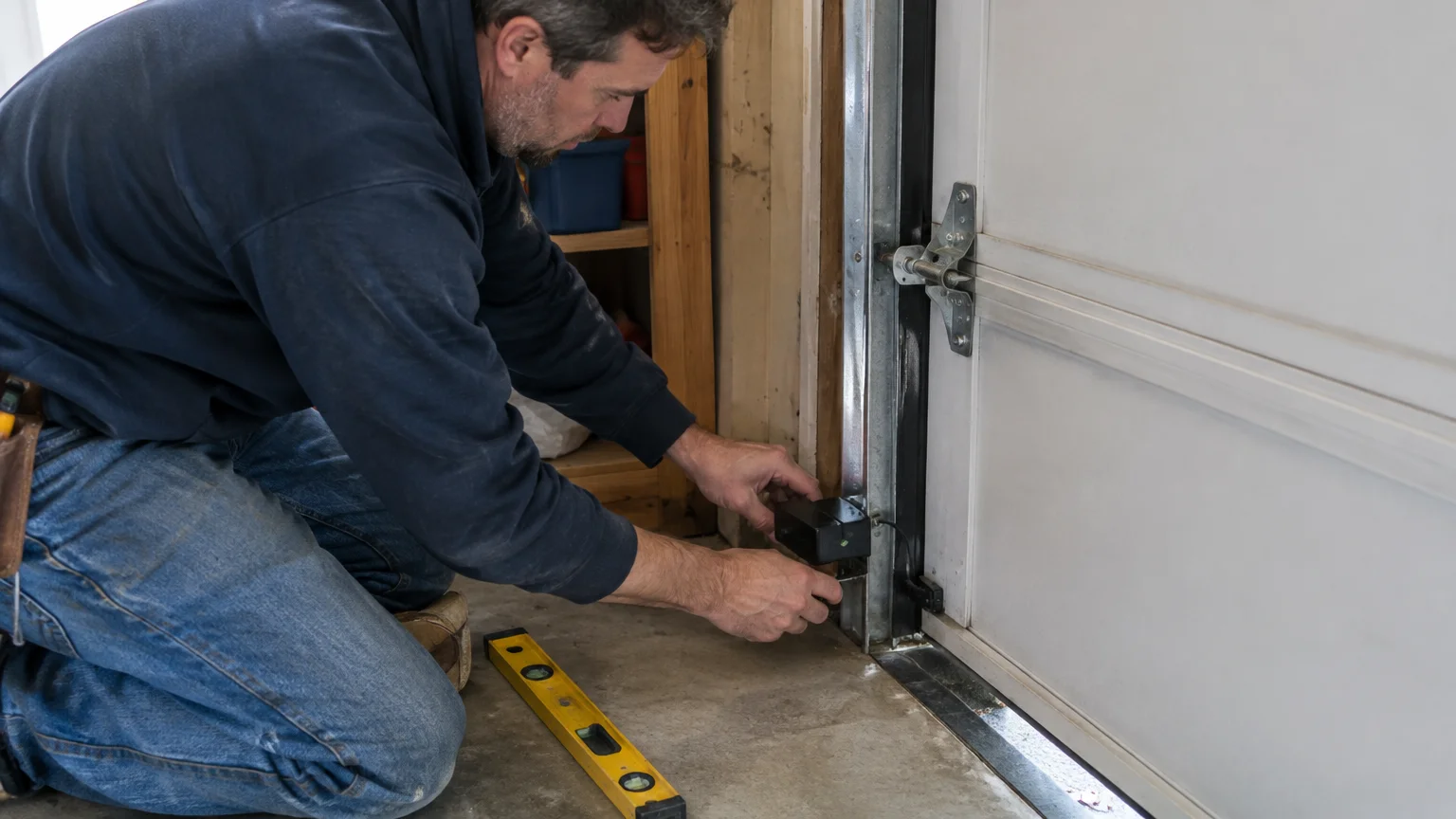
To realign garage door safety sensors, make sure both units face each other. They should sit at the same height and stay firm on their brackets. Small changes may restore the beam, but test the door with care afterward.
Checking sensor position and alignment
First, look across the doorway from one sensor to the other. Both units should point straight across the opening. A sensor that points at the floor, wall, or ceiling may not send the beam to its partner.
Check whether a bracket is bent, loose, or twisted. Tighten only a bracket fastener if it is clearly loose and safe to reach. Do not loosen track bolts or move the vertical track.
Use a level only if you can do so without placing your hands near moving parts. The sensors do not need perfect building-level placement. They must line up with each other. Their lenses should face directly across the opening.
Testing the door after adjustment
Restore power and test the door from the wall control. Keep children, pets, vehicles, and other people away from the opening. The door should move smoothly and respond without reversing for no clear reason.
A basic safety test uses a suitable object across the beam while the door is open. Only do this when the area is clear. Never stand under a moving door. Follow the opener manual because test steps may differ by model.
If the alignment changes again, the bracket may be bent or the track may move. This points to a mechanical problem, not just a sensor adjustment. Garage Door Off Track Repair or Garage Door Maintenance may be a better next step.
Can you bypass garage door safety sensors?
A homeowner should not bypass garage door safety sensors. Bypassing removes a safety feature that helps stop the door when something breaks the beam. It may let the door close while a person, pet, or object is in the way.
Why bypassing the sensors is unsafe
Taping a sensor aside, joining wires, or holding the wall button can defeat part of the safety system. The door may then close without its normal beam check. A heavy door can cause serious injury or property damage.
A bypass can also hide the real problem. The fault may be a broken wire, failed sensor, bent bracket, or opener issue. It can make later testing harder and leave the garage less secure.
The safer choice is to keep the door open only when you can watch it. Keep people and pets away from the opening. If the door is stuck open, arrange repair rather than forcing the system to work.
When sensor replacement or repair is needed
Replacement may be needed when a sensor stays dark, has a damaged lens, or fails after cleaning and alignment. Repair may be needed when the wire, bracket, or mounting point is damaged.
Some sensor parts work only with certain opener brands. The replacement must match the opener system and wiring. A technician can check the part and test the safety response after fitting it.
Do not assume new sensors will fix every closing problem. The opener, tracks, springs, rollers, and travel settings can all affect movement. A full check can help prevent the same failure from returning.
When should you call a garage door repair professional?
Call a garage door repair professional when cleaning and a basic visual check do not solve the problem. You should also call when the door shows signs of a mechanical or electrical fault. Prompt help matters when the door is stuck open, unsafe, or hard to move.
Warning signs of an electrical or opener fault
Professional help is recommended when:
- The sensor lights stay dark after power and wire checks.
- The door reverses even when the beam path is clear.
- The opener hums, clicks, or runs without moving the door.
- The door is heavy, crooked, noisy, or partly off its tracks.
- A spring, cable, roller, or bracket appears broken.
- The sensor position changes again after you adjust it.
A broken spring or cable should not be treated as a sensor issue. These parts can release stored force. Garage Door Cable Repair, Garage Door Opener Repair, or Garage Door Installation may help, based on what the inspection finds.
What to expect from a safety sensor repair visit
A technician will review the symptoms and inspect both sensors. They may check the wires and test the opener response. The tracks, rollers, springs, cables, and door balance may also need review.
These parts affect how the door closes. The repair plan should explain what failed and what work is needed. The service depends on the opener model, sensor condition, access, and any related damage.
Yucca Valley Garage Door Repair serves homes and businesses in the main Yucca Valley area. The team also helps property owners in Joshua Tree, Morongo Valley, Desert Edge, Desert Hot Springs, and nearby communities. Careful service is important when a door will not close.
For urgent garage door opening repair, a technician may first secure the opening. They can then work toward safe operation. The right repair should be based on the fault found, not on bypassing the safety system.
Key takeaways
- Garage door safety sensors use an unseen beam to check the opening.
- Dust, items, loose brackets, and damaged wires can break the signal.
- Steady lights often suggest alignment, but patterns vary by opener.
- Cleaning and careful alignment are reasonable first checks.
- Bypassing sensors is unsafe and may hide a larger door problem.
Frequently Asked Questions
Why does my garage door open but not close?
A door may open but not close when the safety beam is blocked, dirty, or out of line. A loose wire, damaged sensor, or opener fault can cause the same sign. Check the sensor area without touching moving parts. If the lights stay abnormal or the door keeps reversing, professional testing is safer.
Should both garage door sensor lights be on?
Both sensor lights should usually show power and a steady beam when the units are lined up. Exact colors vary by opener brand. A dark or flashing light may point to alignment, wiring, or sensor trouble. The owner manual gives the best meaning for your light pattern.
Can sunlight affect garage door sensors?
Strong sunlight can sometimes affect the receiving sensor. This is more likely when sunlight shines straight into the lens. A small position change or sensor hood may help, but both units must still face each other. If the trouble continues, a technician should check the sensors and opener.
How often should garage door sensors be cleaned?
There is no set cleaning schedule for every garage. Check the lenses when the door will not close or when dust, webs, or moisture appear. A soft, dry cloth is usually enough. Regular Garage Door Maintenance can also help find loose brackets and damaged wires.
Who services garage doors near me?
A local garage door repair professional can service sensors, openers, tracks, springs, cables, and other door parts. Yucca Valley Garage Door Repair helps property owners in and around Yucca Valley with doors that stop, reverse, or will not close.
Conclusion
Garage door safety sensors are small parts, but they have an important safety job. A blocked beam, dirty lens, or shifted bracket may be easy to correct. A dark light, damaged wire, heavy door, or repeated reversal needs more care.
Never bypass the sensors to force the door shut. Keep people and pets clear. Avoid springs and cables. If a simple cleaning or visual check does not solve the issue, Contact us today to arrange a safe inspection and repair with Yucca Valley Garage Door Repair.
If you are not sure what you are dealing with, it is worth having someone look at it before it turns into a bigger job. Get in touch with Yucca Valley Garage Door Repair today and we will tell you where you stand.