Garage Door Off Track Repair in Yucca Valley, CA
The door gets braced, guided back into the rails, and hung again on straight track with healthy rollers, and the thing that pushed it out gets corrected.
Rollers jumped out of the rail, a door that tilts or jams, or a panel bowed where it snagged: any of these on a Yucca Valley area garage door means it is off track. Stop using it and leave the opener alone.
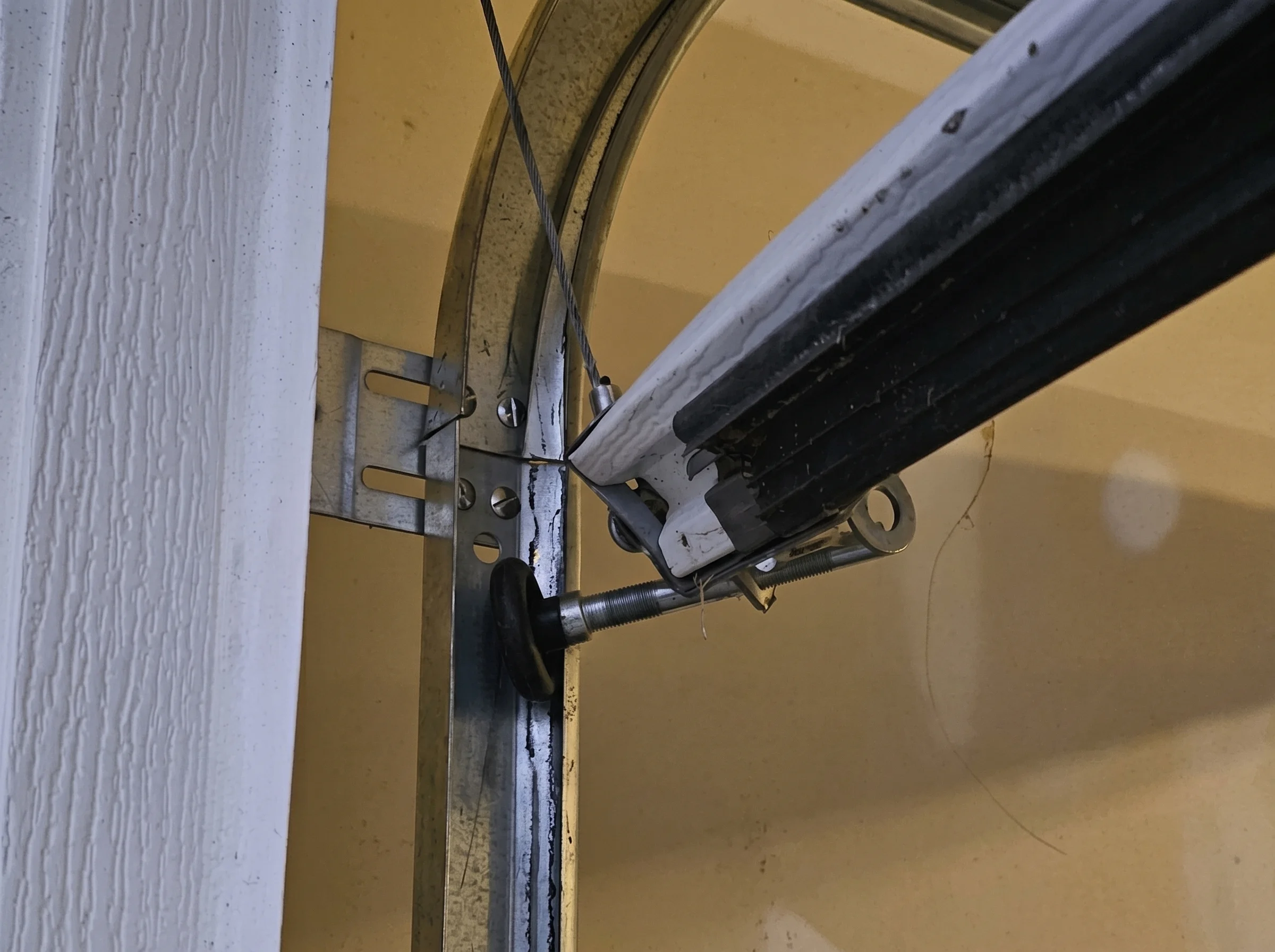
Signs a door has left its track
One or more rollers hanging outside the rail, typically down low or at the bend where the rail curves up toward the ceiling of the garage.
The door cocked or wedged, often halfway up.
A panel bowed or creased where the opener kept shoving at a jammed door.
A rail visibly bent, dented, or peeled off the wall.
Grinding, popping or scraping noises in the moments before it jumped out.
Door out of its track? Leave the opener off. Note which side came out and what happened.
Contact UsWhat knocks a door off its rails
A bumper strike
Reversing into a shut or half-raised door causes this most often, and the bottom of the rail usually bends too.
A cable that broke or slipped
One side falls, the door twists, and rollers pop out. For a loose cable, cable repair covers that half of the story.
Rollers worn or snapped
A roller with a dead bearing scrapes instead of spinning, then leaps out at the first rough spot.
Rail that loosened or bent
Wall brackets slacken after years of vibration. Fault lines cross the Morongo Basin, and the rails then spread until rollers slip free.
An obstacle under the door
Bikes or mowers left in the path; the eye sensors federal rule 16 CFR 1211 requires watch for this, if aligned.
Stay safe
Leave the opener off
It keeps pushing, which can crumple panels or rip the rail off the wall.
Never pull the emergency release with the door part-open and off its rails. It may drop or swing completely free of the track.
Don't pound rollers back into place while the door bears load. An off-track door still holds spring tension and can lurch without warning.
Stand clear of the door, and if a vehicle is trapped inside, say so when you reach out.
How a repair goes
The door is propped and secured so it can't drop or slide during the work, with spring tension handled as needed.
Damage gets mapped
Which rollers, how much rail, whether any panels are creased, and whether a cable or spring set it off.
Rail straightened or swapped
Slight bends can be trued; creased or torn rail sections get replaced.
Worn or broken rollers are replaced, and hinges are inspected, because a cracked hinge will throw another roller.
The door goes back into the rails, wall brackets are tightened, and it cycles fully on the opener. Afterward the opener's force and travel get a second look.
Describe the door's behavior
One or two sentences get things started. The name of the failed part isn't needed at all.
Roller types
Rollers decide how smooth and quiet a door runs, and they wear out well before the door itself does, as a rule.
Plain steel rollers with no bearings are the basic kind. They clatter and grind down the rail along with themselves.
Nylon rollers on sealed bearings are much quieter and need hardly any lubricant at all.
Wobble, flat spots, cracked wheels or seized bearings mean a roller is due.
A door that is merely loud, not broken, often needs mostly new rollers, a job that fits naturally into a maintenance visit as a rule.
What shapes the price of this repair
How far the door slipped
A pair of rollers at one corner, or a door dangling loose.
Rail damage
Straightening or replacing sections, on one side or both.
Rollers and hinges that must be replaced.
Creased or cracked panels
A badly bowed panel might need replacing, which can mean sourcing a match for an older door.
A cable or spring failure that led to the slip.
When a panel is beyond saving
A door hit hard can have panels too bent to straighten. One panel can often be replaced alone; check a provider's license status and complaint history with the Contractors State License Board.
If no match exists, or several panels are hurt, garage door installation lays out the replacement options.
Questions people ask
Can I press the rollers back in by myself?
Maybe, if a single roller popped out low on a closed door and the rail isn't bent and no cable is loose. Beyond that, stop: the door is heavy, carries spring tension, and can move without any warning, even when it looks settled.
Why does it always jump out on one side?
Usually a rail slightly out of line, a slack wall bracket, or a cable on that side needing adjustment. Hanging the door again without curing the cause just invites a repeat.
Do the rails need oil?
No. Keep them clean and dry, since oil there gathers grit. Roller bearings, hinges and springs are the parts that get lubricant.
More garage door services
Garage Door Cable Repair
Cables that frayed, broke or slipped, and doors that tilt to one side.
Read more →Garage Door Spring Repair
Snapped torsion or extension springs swapped for ones rated for your door's weight.
Read more →Garage Door Installation
Fresh steel, wood, composite or glass doors, sized precisely to your own opening.
Read more →Contact us
Say where the door is stuck (shut, open, or halfway), which side came out, whether anything struck it, and whether a cable looks slack.
Your best photo is of each side of the door, taken from a few feet back.