A wall mount garage door opener can be a good choice when a ceiling rail will not fit. It works beside the door and turns the torsion shaft. This design may suit low ceilings, blocked overhead space, and special layouts. The door, spring system, shaft, wall, and safety parts must all match before installation.
Yucca Valley Garage Door Repair helps homeowners, business owners, and property owners understand this opener style. In Yucca Valley, garages may have storage, beams, sloped ceilings, or tall doors that limit a standard opener. A careful check helps you choose a safe system instead of forcing the wrong model into the space.
Table of Contents
- What is a wall-mount garage door opener?
- When is a wall-mount opener the only practical option?
- How do you know whether your garage door is compatible?
- What are the advantages of choosing a side-mount opener?
- What are the disadvantages of wall-mount garage door openers?
- How do wall-mount openers compare with ceiling-mounted models?
- What features should you look for in a side-mount opener?
- What does installing a wall-mount garage door opener involve?
- Can you replace a ceiling-mounted opener with a wall-mount model?
- How should you choose the right wall-mount opener for your garage?
- Key takeaways
- Frequently Asked Questions
- Conclusion
What is a wall-mount garage door opener?
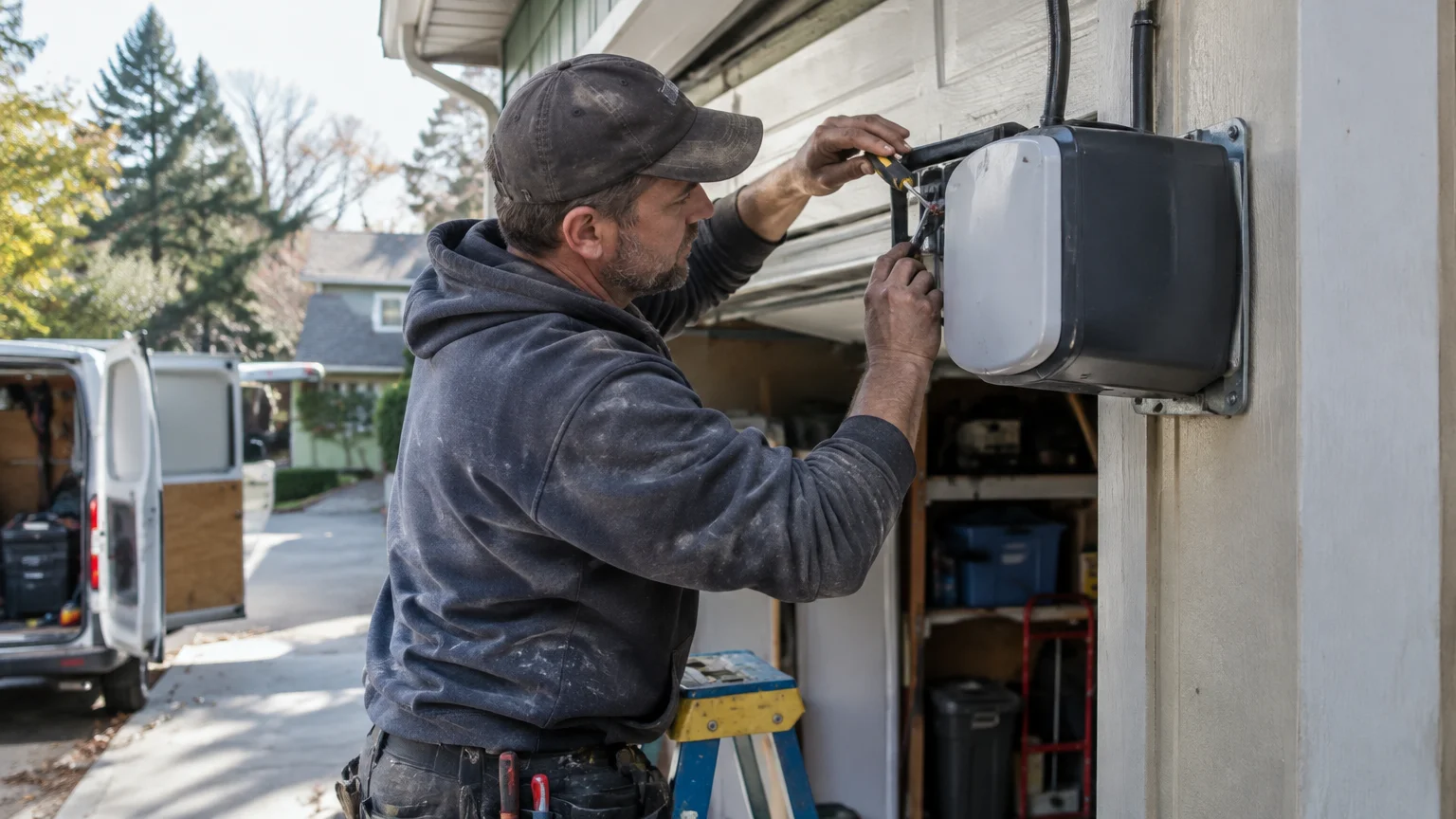
A wall-mount garage door opener is a motor placed beside the garage door. It turns the torsion shaft, which is the metal bar above the door. The shaft works with the spring and cable system to lift and lower the door. This design is also called a side-mount or jackshaft opener.
How side-mount openers operate
The motor connects to the shaft near the door. When the motor turns, the shaft turns with it. Drums and cables then move the door up or down. The opener does not pull the door along a long rail across the ceiling.
This setup needs the right torsion spring system. The door must also move smoothly by hand when the opener is disconnected. A motor cannot safely fix a door that binds, drags, or has damaged cables. Those problems should be handled before a new opener is fitted.
How they differ from ceiling-mounted openers
A ceiling-mounted model uses a rail, trolley, and arm. The motor often hangs near the back of the garage. A side-mount model uses wall space beside the door and leaves the center ceiling more open.
Both designs need working safety sensors and a sound door. The better choice depends on the garage layout, door design, headroom, and features you want. The name of an opener does not prove that it will fit every door.
When is a wall-mount opener the only practical option?
A wall-mount opener may be the best practical choice when a ceiling rail cannot fit. Low headroom, deep beams, sloped ceilings, and overhead storage can cause this problem. A door that sits very close to the ceiling may also leave little room for a standard system.
Low ceilings, obstructed ceilings, and unusual layouts
A ceiling-mounted opener needs room for its motor, rail, and moving trolley. Lights, ductwork, storage racks, and beams can take up that space. A wall-mounted unit avoids many of these conflicts.
Some garages have raised tracks that follow the roof line. Others have tall doors that need more lift than a usual rail can provide. A side-mount design may work well in these layouts, but the shaft and spring arrangement still need a full check.
Doors with limited overhead clearance
Limited headroom does not always mean that a wall-mount unit is required. Low-headroom hardware may solve some garage problems. A trained technician can compare that option with a side-mount design.
The door must not rub against the opener or nearby walls. There must also be room for the motor, wires, release cord, and future service. A careful inspection helps prevent a tight fit from becoming a daily safety problem.
How do you know whether your garage door is compatible?
Compatibility depends on the complete door system. It does not depend only on open wall space. The main checks include the torsion shaft, spring location, door balance, cable condition, door size, and mounting surface. The maker’s instructions also set limits for each model.
Door balance, shaft design, and torsion springs
A balanced door should stay controlled when opened by hand with the opener disconnected. If it drops, rises, or feels very heavy, the spring system may need service. Torsion springs hold strong stored energy, so homeowners should never adjust or replace them.
The shaft must extend far enough for the opener connection. Drums, cables, bearings, and end plates must also be in good shape. A damaged shaft or loose bracket can lead to poor tracking and unsafe movement.
A garage door spring helps balance the door’s weight. It does not make a damaged door safe. Garage Door Spring Repair should be handled by someone with the right tools and training.
Door weight, height, and lifting requirements
Manufacturers list limits for door height, weight, travel, and daily use. A door that opens many times each day may need a model made for heavier use. A tall or wide door may also need a certain drive and control setup.
A professional can test the door before selecting the motor. An oversized opener will not fix a weak spring or damaged panel. Yucca Valley Garage Door Repair can help Yucca Valley property owners match the motor to the real door system.
What are the advantages of choosing a side-mount opener?
The main benefit is better use of the garage ceiling. A side-mount unit may also provide useful lighting, locking, and smart controls. These benefits matter most when the garage has little overhead room or the owner wants more open space above a vehicle.
Clearer ceiling space and improved access
Without a long rail across the ceiling, the center of the garage can hold more storage or lighting. The ceiling may look less crowded. It may also be easier to move tall items into the garage.
The side position can make the motor easier to reach for service. It must still be protected from impacts and water. A wall that is weak, damp, or covered by shelving may not be a safe mounting place.
A clear ceiling can also make it easier to inspect insulation, lights, and the garage door seal. The seal helps limit dust, wind, and pests around the bottom of the closed door. It does not replace a sound door or a working opener.
Security, lighting, and smart-home benefits
Many modern openers offer automatic locking, motion lights, battery backup, and app control. Some send alerts when the door opens or closes. These tools can help owners check the garage while they are away.
Smart controls still need a safe setup. Use a strong network password and current security settings. Remote access should not replace regular checks of the door, cables, springs, rollers, and safety sensors.
What are the disadvantages of wall-mount garage door openers?
A wall-mount garage door opener needs the right door and a strong mounting area. It may not suit every shaft, spring layout, or garage wall. It can also need careful alignment during installation.
Installation limitations and alignment requirements
The motor must sit square with the shaft. Brackets must hold firmly during repeated starts and stops. Small alignment errors can cause noise, wear, or uneven movement.
The opener also needs space for its release system and wiring. Walls may contain pipes, wires, or finished surfaces that make the work harder. A technician should check the area before drilling or removing old hardware.
The wall may need added support in some garages. A poor mounting surface can let the motor move. That movement may place extra stress on the shaft, brackets, and door.
Maintenance concerns and operating noise
A side-mount unit does not remove the need for door care. Cables, drums, rollers, hinges, bearings, and springs still need attention. Dirt, rust, loose fasteners, and poor balance can shorten opener life.
Some people notice motor or gear noise because the unit sits near the wall. Noise can also point to a door problem rather than a motor problem. Homeowners can clean visible parts and check for loose objects, but spring and cable work is not safe for DIY repair.
How do wall-mount openers compare with ceiling-mounted models?
Wall-mount and ceiling-mounted openers can both operate a properly balanced door. The main difference is where the motor sits and how it transfers force. The garage design should guide the choice instead of one feature or brand name.
Comparing drive systems and mounting locations
A ceiling model uses a rail and trolley. It often works well in a standard garage with enough headroom. A wall-mount unit turns the shaft directly and can leave the ceiling free.
Belt drive garage door opener systems are known for smooth operation in many ceiling-mounted designs. A side-mount opener may also run quietly, but its sound depends on the motor, shaft, wall, and door condition. The full system matters more than the label.
Choosing based on door use and garage design
A family garage with normal headroom may have several good options. A business, tall door, or busy garage may need a system made for more frequent cycles. A professional can review how often the door is used and how the building is laid out.
Also consider power-loss access, smart controls, lighting, and future repairs. Garage Door Opener Repair may be needed when an old system has damaged wires, worn gears, or a failing control board.
The best garage door opener is not always the strongest model. It is the model that matches the door, wall, controls, and daily use. A correct match can help reduce strain and make later service easier.
What features should you look for in a side-mount opener?
The right features depend on the door, household, and access needs. Safety systems should come first. Convenience features matter after the motor, wall, door balance, and controls are properly matched.
Battery backup, automatic locking, and safety sensors
Battery backup can help the door work during a power outage. An automatic lock can help hold the door closed when the opener is idle. Safety sensors use an invisible beam near the floor to detect an object in the door’s path.
Sensors must face each other and stay clear. A flashing light, reverse problem, or door that closes only while a button is held may need service. Never bypass the safety system.
Garage door safety also depends on the door itself. A strong opener cannot make broken cables, bent tracks, or weak springs safe. Keep children away from moving parts and do not allow anyone to play under the door.
Remotes, keypads, Wi-Fi, and smart controls
A remote lets a driver open the door from a vehicle. A wireless keypad can give family members or workers entry without a remote. Wi-Fi controls may allow alerts, schedules, and remote status checks.
Before choosing smart features, check whether the opener works with your network and preferred platform. Keep old remotes secure when users move out or a property changes hands. A garage door opener universal remote may work with some systems but not all systems.
What does installing a wall-mount garage door opener involve?
Installing a wall-mount garage door opener involves checking the door, securing the motor, connecting controls, and testing safety functions. It is more than attaching a motor to the wall. The door and spring system must be ready before the opener is placed under load.
Preparing the door and mounting surface
A technician checks balance, travel, rollers, hinges, cables, drums, shaft space, and spring condition. The mounting surface must support the unit without movement. Any door fault should be fixed before the new motor is installed.
Homeowners can safely clear stored items, remove loose objects near the door, and keep children and pets away during work. They should not loosen spring hardware, remove lift cables, or change brackets that carry door weight.
If the full door needs replacement, Garage Door Installation may be the better service. A new door and opener should be planned as one safe system when possible.
Connecting controls, sensors, and the emergency release
The installation includes the wall control, safety sensors, power connection, emergency release, and remote devices. The technician then tests opening, closing, reversing, locking, and manual release functions.
Work on torsion springs, extension springs, lift cables under tension, and bottom brackets can cause severe injury. These parts should be handled by someone with the right tools and training. Homeowners do not need a professional to clear the area or read basic product information, but they do need one for hazardous door work.
Can you replace a ceiling-mounted opener with a wall-mount model?
A ceiling-mounted opener can sometimes be replaced with a wall-mount model. The change is not automatic. The door must have a suitable shaft and torsion setup. The wall must also provide enough strength and space for the new equipment.
Signs the existing setup can be converted
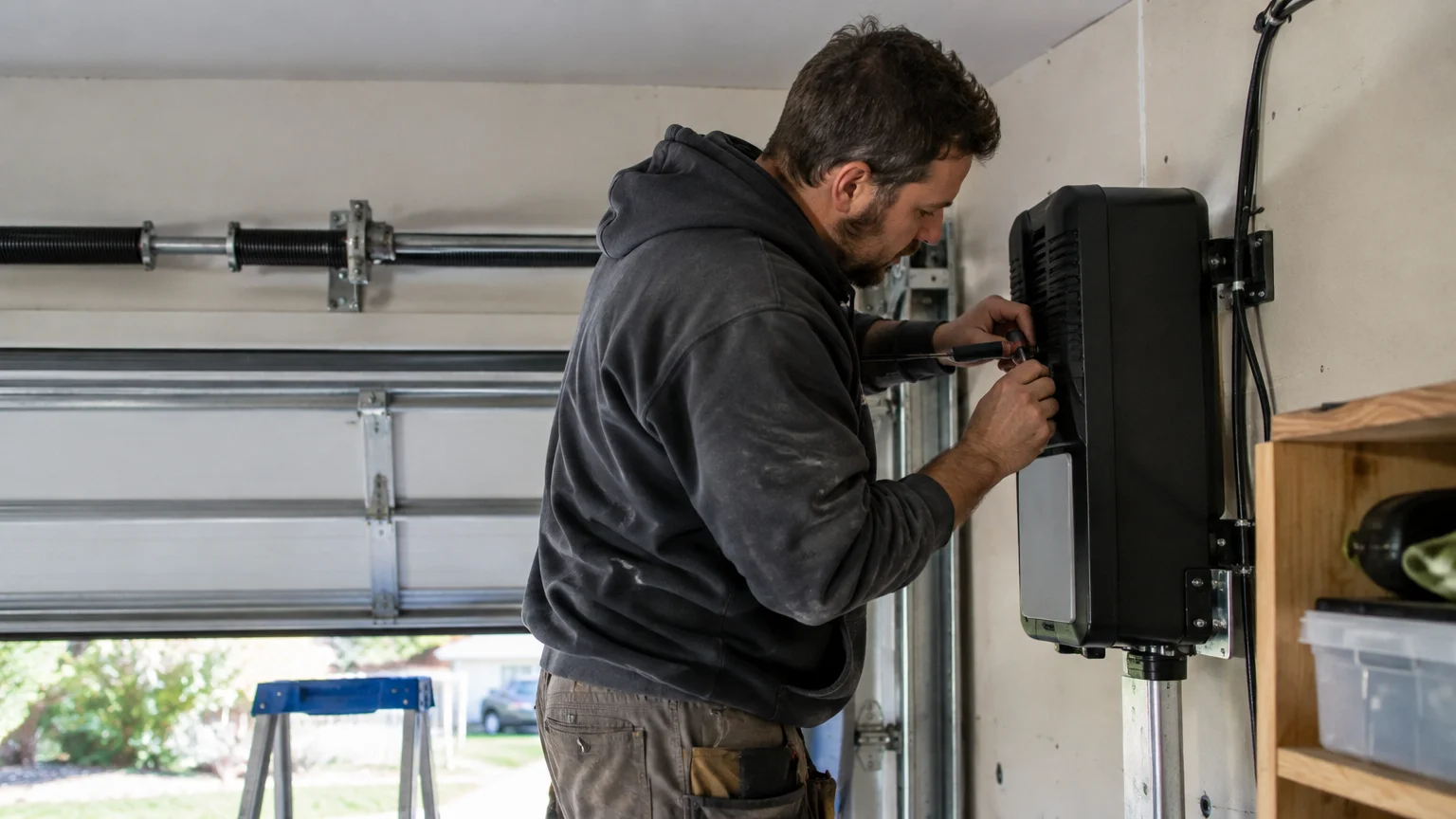
A conversion may work when the door has a compatible shaft and a sound spring system. The opener must fit beside the door. There must also be room for the motor, release cord, wiring, controls, and service access.
The old rail and hanging brackets may need removal. Holes, wires, or ceiling storage may need attention after the old system comes down. Select the new system before removing old equipment.
Why spring and door repairs may be needed first
A wall-mount motor relies on the door’s shaft and spring system. A weak spring, damaged cable, bent track, or poor balance can place extra stress on the motor. Garage Door Off Track Repair or Garage Door Cable Repair may be needed before conversion.
Homeowners should not attempt spring adjustments or cable replacement. Stored force can release without warning. A trained professional can make the door safe before checking whether the new opener will fit.
How should you choose the right wall-mount opener for your garage?
Choose the opener after checking the door, shaft, wall, controls, and daily use. A good match should move the door smoothly without forcing a weak or damaged system. The safest choice is based on fit first and extra features second.
A practical compatibility and feature checklist
A homeowner can gather useful information without touching dangerous hardware:
- Note the door type, height, width, and general condition.
- Check whether beams, storage, or low headroom affect the ceiling.
- Look for a clear wall area beside the door.
- List needed features such as backup power, lighting, keypad, or Wi-Fi.
- Record grinding, stopping, reversing, or slow movement.
- Keep the opener model and door papers for the technician.
These notes help explain the problem. They do not replace a balance test or inspection of springs, cables, brackets, and tracks.
When to have a garage door professional assess the installation
A professional assessment is wise when the door is heavy, uneven, noisy, stuck, off track, or hard to lift. It is also needed before changing spring hardware or choosing a side-mount unit for an unusual layout.
Yucca Valley Garage Door Repair serves property owners across Yucca Valley and nearby communities. The team can help review opener faults, door problems, and installation limits. Contact us promptly when a broken opener blocks access, leaves the door open, or creates a security concern.
Key takeaways
- A wall-mount garage door opener sits beside the door and turns its shaft.
- It can suit low ceilings, blocked overhead space, and unusual layouts.
- The door needs the right spring, shaft, balance, and mounting conditions.
- Homeowners can clear the work area and check visible problems, but not springs or cables.
- Safety sensors, backup power, lighting, and smart controls should follow fit checks.
Frequently Asked Questions
Is a wall-mount garage door opener better than a ceiling model?
Neither style is best for every garage. A wall-mount garage door opener can save ceiling space and suit tight layouts. A ceiling model may be simpler for a standard garage with open headroom. The right choice depends on the shaft, spring system, wall strength, space, and daily use.
Can any garage door use a side-mount opener?
No. The door needs a compatible torsion shaft and spring arrangement. It must also be balanced and move freely before the motor is connected. Door size, shaft space, wall strength, and the maker’s limits all matter. A professional should inspect the full system before a model is chosen.
Are wall-mount openers quieter?
They can be quiet, but sound depends on the whole door system. Rollers, hinges, bearings, springs, the mounting wall, and the motor all affect noise. Grinding or shaking may show that repair is needed. Cleaning visible parts is safe, but spring and cable work needs trained help.
Can a homeowner install one safely?
Some preparation is safe, such as clearing the garage and reading product information. The actual fitting can involve shaft connections, brackets, wiring, sensors, and door forces. Homeowners should not adjust springs, remove cables, or work on bottom brackets. These parts can cause severe injury when handled incorrectly.
What should someone do when the opener stops working?
Check whether the opener has power, whether the remote battery works, and whether anything blocks the safety sensors. Do not force the door or bypass the sensors. If the door is heavy, stuck, crooked, or noisy, stop using it and arrange Garage Door Opener Repair.
Conclusion
A wall-mount garage door opener can solve problems that make a ceiling-mounted system impractical. It can clear overhead space, support smart controls, and fit certain door layouts. Still, the door, spring system, shaft, wall, and safety controls must all match.
For homeowners and business owners in Yucca Valley, the safest choice starts with an inspection rather than a guess. Yucca Valley Garage Door Repair can help identify opener faults, door issues, and installation limits. Contact us today when urgent opener trouble affects access or security.